Till now we have discussed and learned how digital audio works inside the devices. Now let’s discover how they interconnect: how professional audio networks work, explore the key wired digital audio transmission protocols — AES3, MADI, AES50, Dante and SMPTE-2110 .
In the realm of professional audio, the need to transmit multiple channels of high-quality digital audio reliably over significant distances is paramount. From live sound reinforcement at large venues to complex studio routing and broadcast facilities, various wired digital audio transmission protocols have emerged to address these demands. These protocols provide robust, synchronized, and often bidirectional pathways for audio data, replacing bulky analog snake cables with streamlined digital connections.
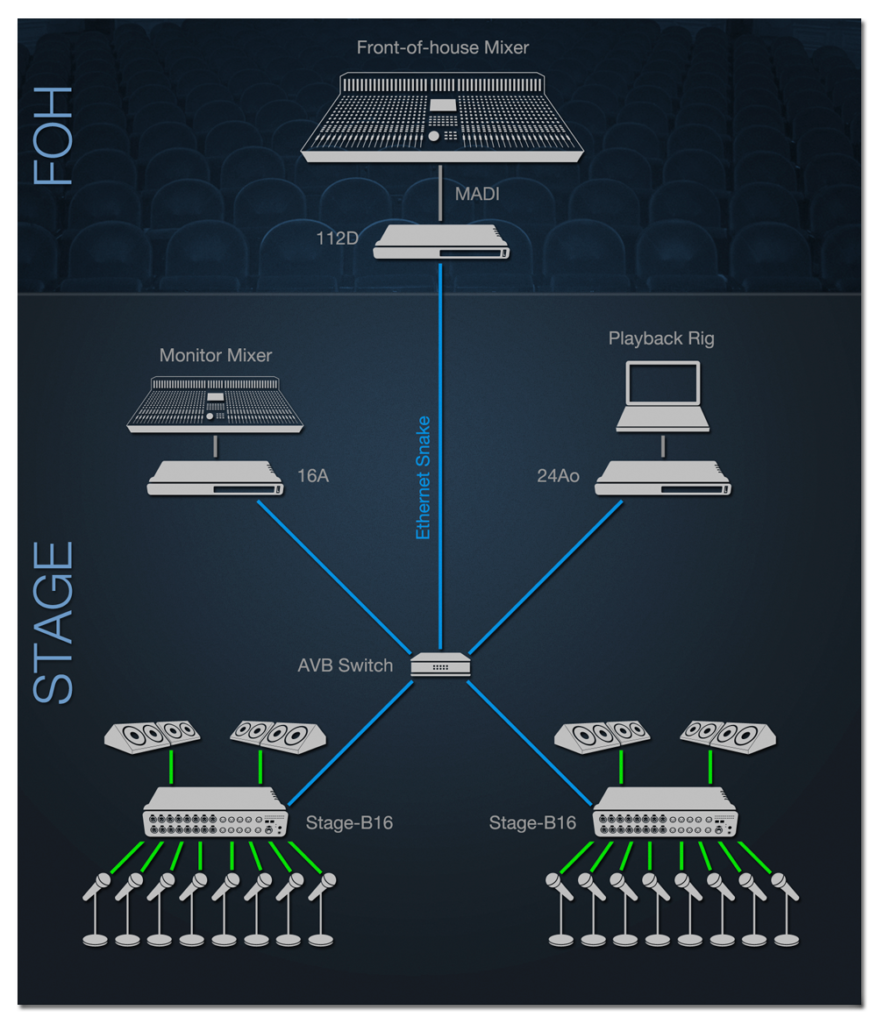
Traditional analog audio transmission over long distances suffers from inherent limitations, including signal degradation, increased noise susceptibility, and the sheer bulk and cost of multi-core cabling. Digital audio transmission overcomes these challenges by encoding audio signals into digital data streams, allowing for pristine quality over extended runs and the ability to carry numerous channels on a single cable.
The first protocol that came to resolve this problem was AES3. It was defined by AES Audio Engineering Society and European Broadcast Unit.
AE3 (AES/EBU) The Foundational Standard
Description: AES3 is one of the earliest and most fundamental digital audio transmission standards. It typically transmits two channels of uncompressed digital audio (stereo) over a single balanced XLR cable (similar to analog audio connections) or a 75-ohm coaxial cable.
Key Features: Supports sample rates up to 192 kHz and bit depths up to 24 bits. It also carries embedded metadata like channel status and user bits.
Frame structure: A frame is uniquely composed of two subframes
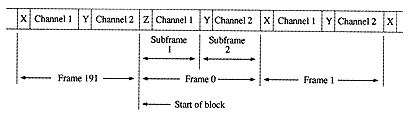
The first subframe normally starts with preamble “X”. However, the preamble changes to preamble “Z” once every 192 frames. This defines the block structure used to organize the channel status information. The second subframe always starts with the preamble “Y”.
The modes of transmission are signaled by setting bits 0 to 3 of byte 1 of channel status.
Two-channel mode: In two-channel mode, the samples from both channels are transmitted in consecutive subframes. Channel 1 is in subframe 1, and channel 2 is in subframe 2.
Stereophonic mode: In stereophonic mode, the interface is used to transmit stereophonic audio in which the two channels are presumed to have been simultaneously sampled. The left, or “A”, channel is in subframe 1, and the right, or “B,” channel is in subframe 2.
Single-channel mode (monophonic): In monophonic mode, the transmitted bit rate remains at the normal two-channel rate and the audio sample word is placed in subframe 1. Time slots 4 to 31 of subframe 2 either carry the bits identical to subframe 1 or are set to logic 0. A receiver normally defaults to channel 1 unless manual override is provided.
Primary/secondary mode: In some applications requiring two channels where one of the channels is the main or primary channel while the other is a secondary channel, the primary channel is in subframe 1, and the secondary channel is in subframe 2.
Distance: Practical transmission distances are generally up to 100 meters over balanced cables and several hundred meters over coaxial cables.
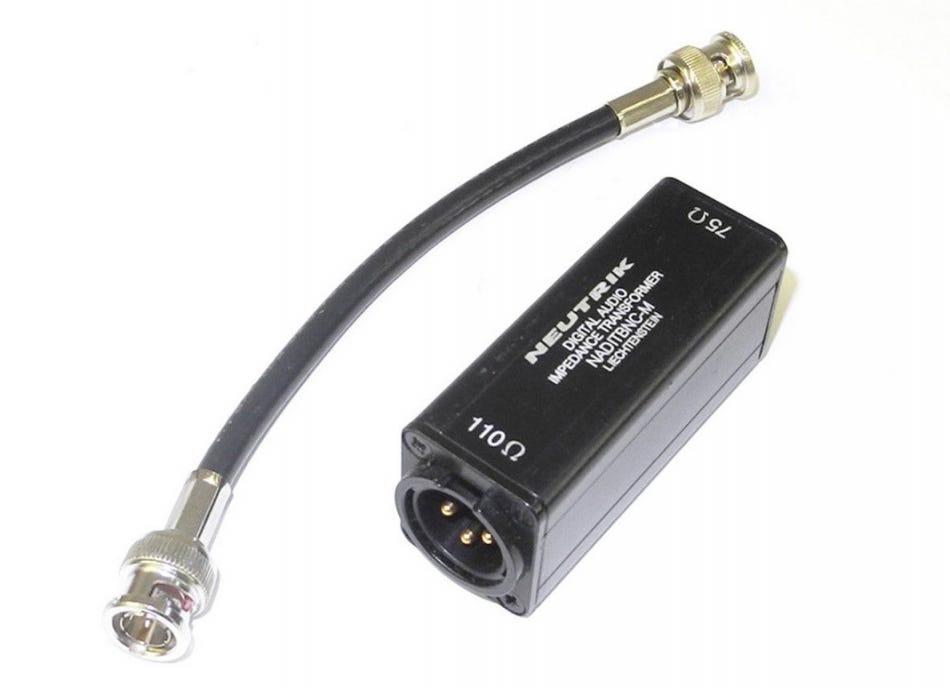
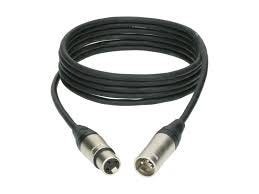
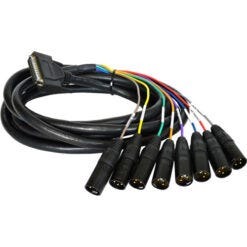
Applications: Interconnecting digital audio devices like CD players, DAT recorders, mixers, and processors. It’s a ubiquitous standard for basic digital audio connectivity.
After the audio was transmitted digitally from a distance , we still had to run dozens of cables for multichannel transmission of digital audio. To solve this problem and run multichannel audio through a single cable done by MADI.
AES10 (MADI): High Channel Count over Distance
Description: AES10, more commonly known as MADI (Multichannel Audio Digital Interface), was developed to address the need for transmitting a large number of audio channels over a single cable.
Key Features: Originally specified for 56 channels at 48 kHz or 28 channels at 96 kHz over coaxial cable (BNC connectors) or optical fiber. Later revisions increased channel counts. It supports up to 24-bit audio.
Distance: Can achieve distances of up to 100 meters over coaxial cable and several kilometers over optical fiber, making it ideal for large-scale audio systems.
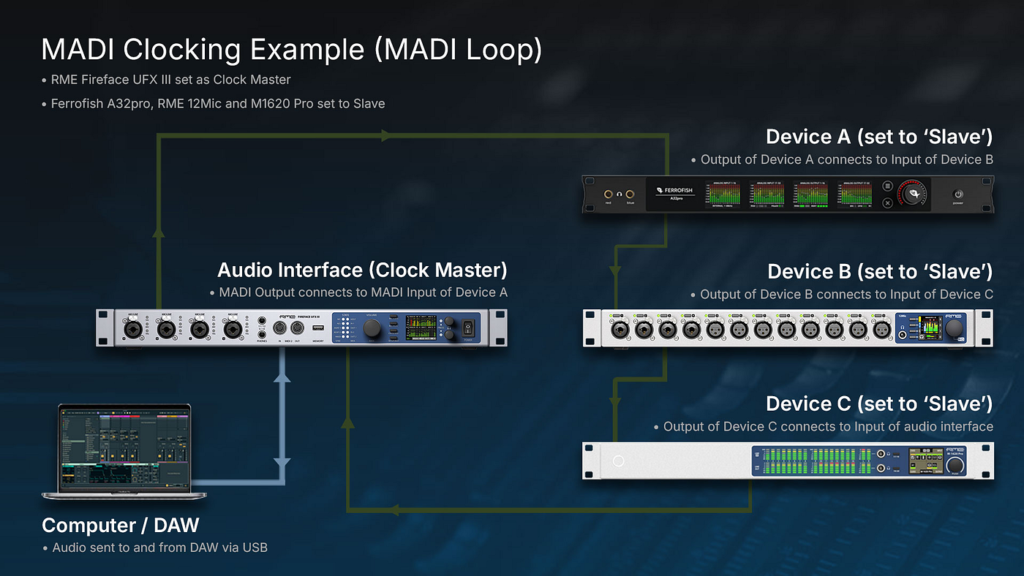
Applications: Connecting digital mixing consoles to stage boxes, multitrack recorders, and digital distribution systems in broadcast, live sound, and studio environments.
AES50: High Performance for Live Sound
Description: AES50 is a high-performance, bidirectional digital audio protocol primarily utilized in live sound mixing consoles and related equipment, notably developed by Klark Teknik (part of the Music Tribe).
Key Features: Offers very low latency and high channel counts (typically 24, 48, or 96 channels in each direction). It often runs over shielded Cat 5e Ethernet cables with EtherCon connectors for robust connections. It also provides integrated control data alongside the audio.
Distance: Reliable transmission distances are generally up to 100 meters over shielded Cat 5e.
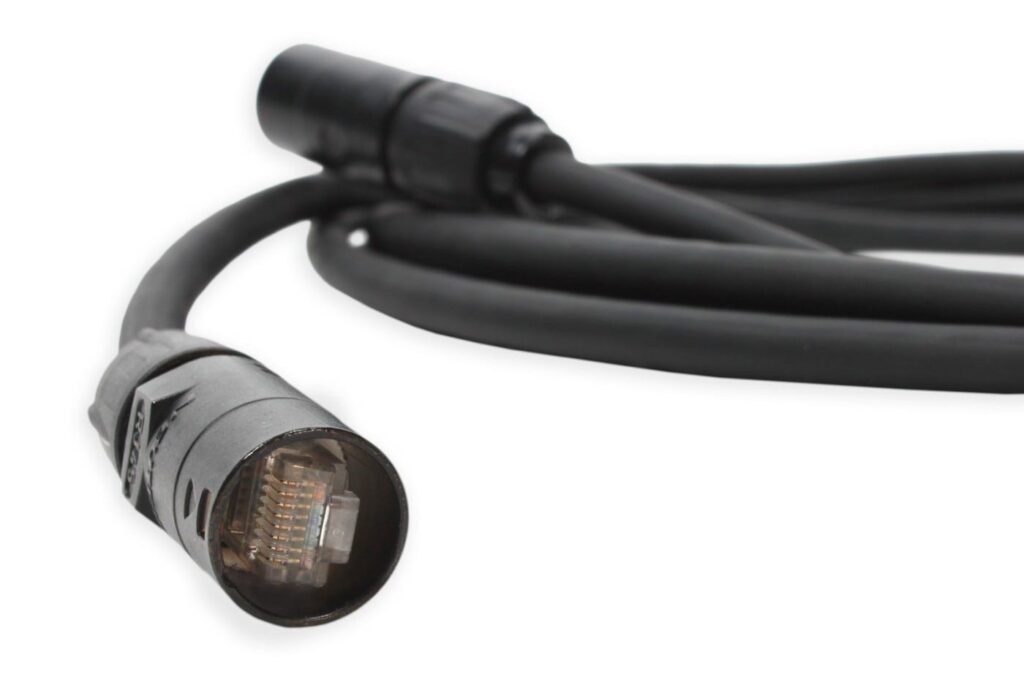
Applications: Connecting digital mixing consoles to digital stage boxes, personal monitoring systems, and other audio processing units in live performance settings.
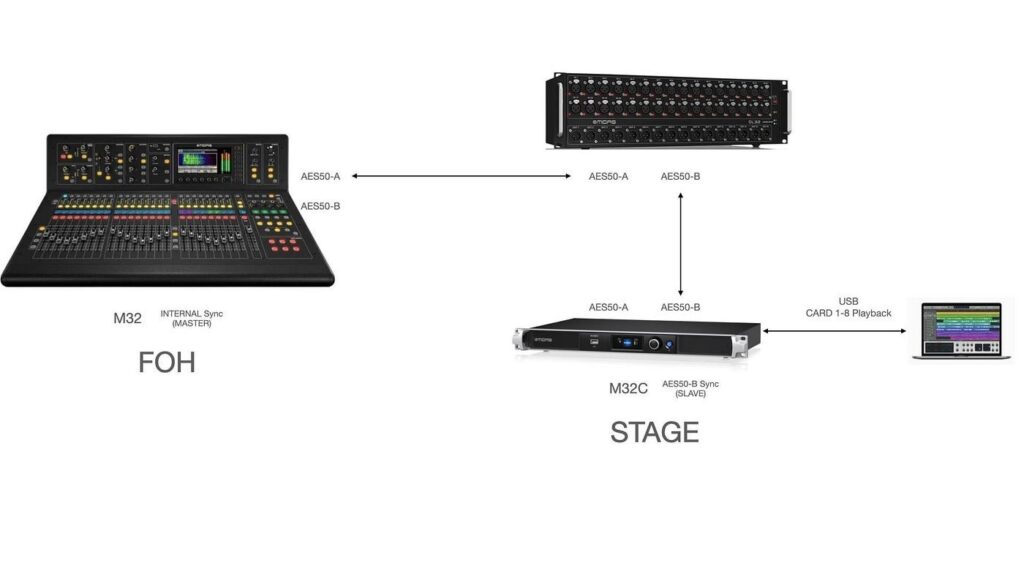
Both MADI and AES50 address the challenge of transmitting high channel counts of digital audio, simplifying complex cabling and reducing signal degradation compared to analog alternatives.
Difference in Application:
MADI is often favored in broadcast and recording studios for its long-distance capabilities and robust transmission.
AES50 is prevalent in live sound due to its use in Midas and Behringer systems.
Dante: Audio Over IP Networking
Like MADI and AES50, Dante enables the transmission of many audio channels, reducing the need for bulky analog cabling by using Ethernet networks. Dante aims to improve interoperability between different audio devices.
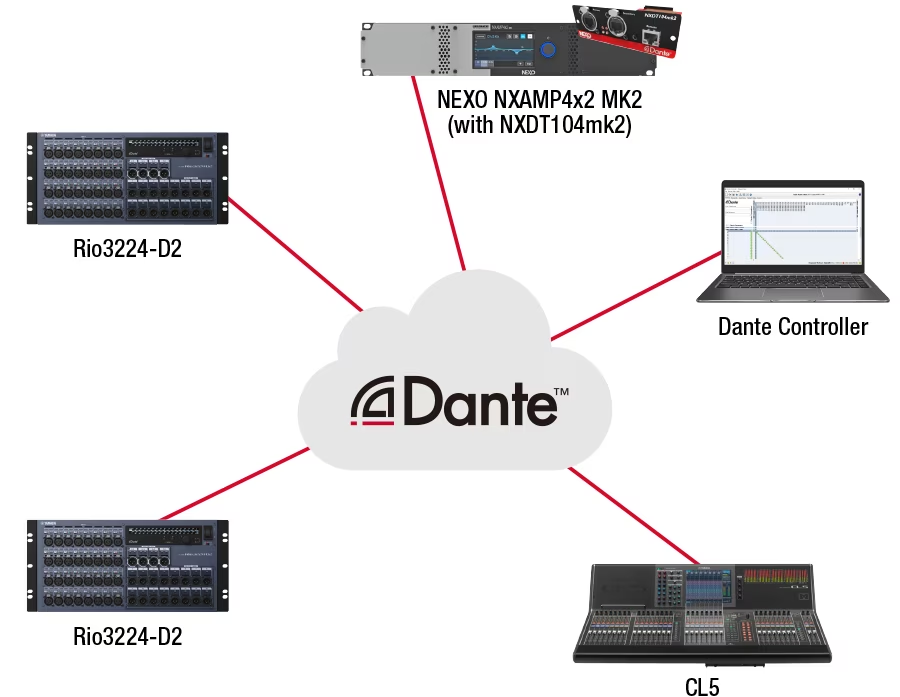
Description: Dante (Digital Audio Network Through Ethernet) is a more modern protocol that transmits uncompressed, multi-channel digital audio over standard IP (Internet Protocol) networks using Ethernet cables (typically Cat5 / Cat 5e (UTP) or higher). Developed by Audinate, it has become a widely adopted standard.
Key Features: Highly scalable channel counts (hundreds or even thousands), low latency, and the ability to utilize existing network infrastructure. Supports high sample rates and bit depths. Dante also provides integrated device discovery, routing, and control.
Dante uses PTP (Precision Time Protocol) to distribute clock over an IT network via Multicast signal. All devices on the Dante network must sync to the same clock, otherwise devices will have their clock drift and they will mute. Anything that interferes with the PTP clock will affect performance. Asymmetrical Networks such as MPLS and GPON using non-multicast technologies can fall into this category as well as networks with a misconfigured ACL. Symptoms can include multiple PTP master showing as well as devices losing Sync and muting.
Distance: Transmission distances are limited by Ethernet standards (typically 100 meters per network segment), but networks can be extended using switches and fiber optic links for much greater distances.
Complex Routing: Dante allows for flexible routing of audio signals to multiple devices simultaneously, simplifying complex audio distribution scenarios.
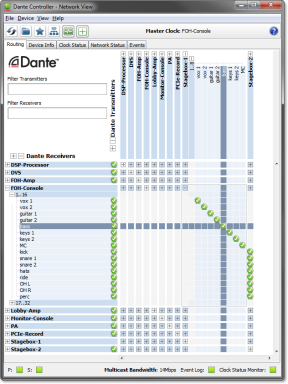
Scalability: Dante networks can be easily expanded to accommodate more devices and channels as needed.
Applications: Widely used in broadcast, live sound, recording studios, houses of worship, education, and corporate AV installations due to its flexibility, scalability, and integration with IT infrastructure.
SMPTE 2110 Digital Media over IP Network
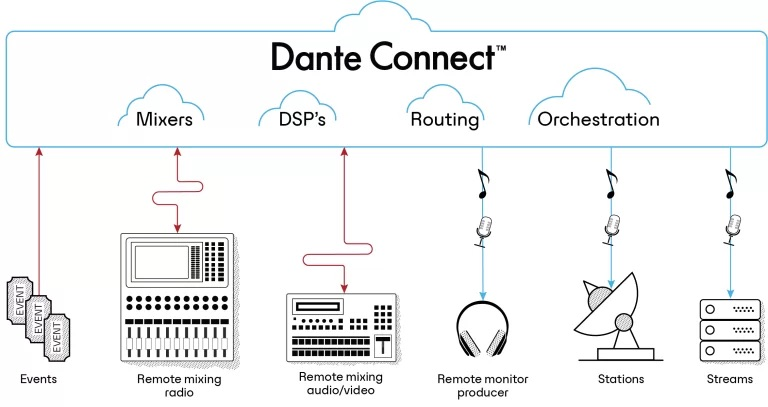
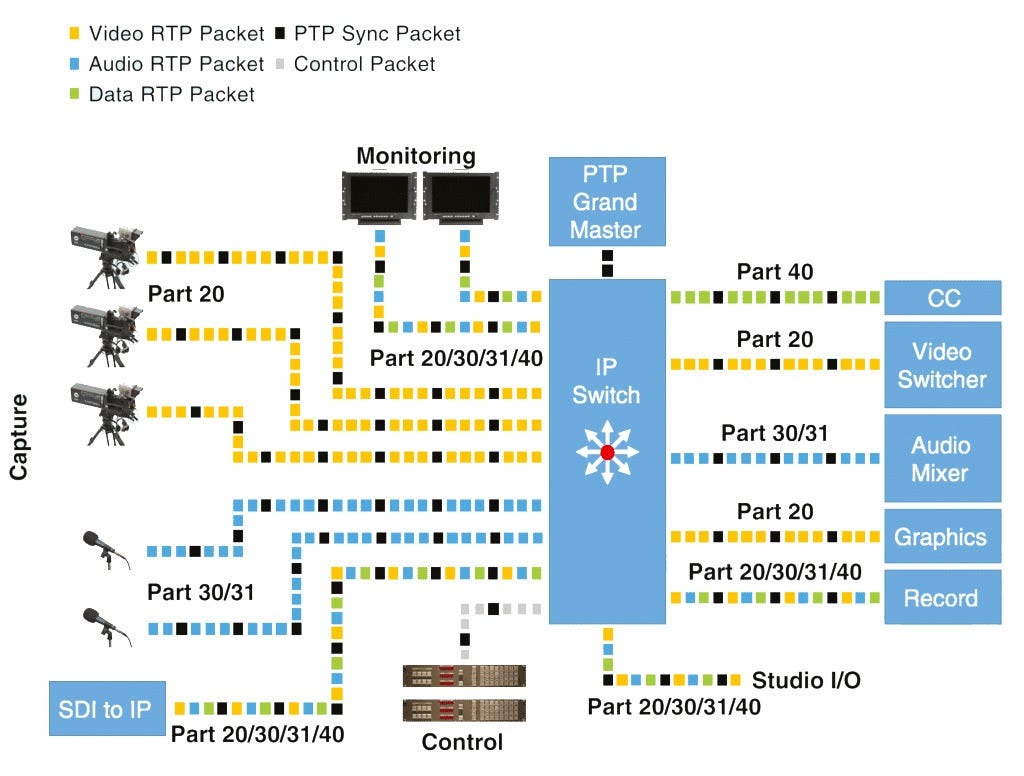
Description: SMPTE ST 2110 is a suite of standards developed by the Society of Motion Picture and Television Engineers (SMPTE) that revolutionizes the broadcast and media production industries by defining how to transport digital media, including video, audio, and ancillary data, over Internet Protocol (IP) networks.
Conclusion
In conclusion, the evolution of digital audio transmission standards, from AES3, MADI and AES50 to DANTE and SMPTE 2110, reflects the increasing demands for higher channel counts, greater distances, lower latency, and more flexible, IP-based solutions in professional media. While standards like AES3, MADI, and AES50 serve specific audio transport needs, and solutions like DANTE offer more comprehensive audio-over-IP capability, SMPTE 2110 provides an even broader framework for managing video, audio, and data over IP networks with precise synchronization and high bandwidth, making it well-suited for modern, high-resolution, and complex media productions.
Recommendations
To bridge the gap between Audio/Visual and IT, you should target AV-over-IP (AVoIP) specific programs or foundational IT network certifications. With the convergence of these two fields, a solid networking foundation is just as critical as your AV knowledge. Get your certifications.
Dante by Audinate
This program is recommended. From basic networking to the audio pro in Dante systems.
https://www.getdante.com/resources/training/dante-certification-program
Pro AV by Netgear
If not Cisco certification, take it. In addition also check the Broadcast certification on the site.
https://academy.netgear.com/course/index.php?categoryid=1
Audiovisual Network Professional (ANP) Prep Online
Golden standard as they describe
https://www.avixa.org/training-certification/certification-prep/anp-exam-prep
————-
If you need advise or assistance in person find me here:
https://linktr.ee/michael.wasserman