
We promised articles that would analyse different segments of the professional audio. This time I took a deep dive into automotive audio. Findings? What was once a race to pack more speakers is now a dynamic convergence of software, immersive audio and AI-driven personalization. If you think automotive audio is still about subwoofers and tweeters, it’s time to buckle in.
Market overview
The global automotive audio market is evolving from a simple hardware accessory to a software-defined, intelligent, and immersive in-cabin experience. Valued at an estimated $10.3 billion in 2023, this dynamic market is projected to surpass $14 billion by 2030, reflecting a robust Compound Annual Growth Rate (CAGR) of 6.80%. This expansion is driven by several factors: the increasing proliferation of Electric Vehicles (EVs), the integration of sophisticated smart dashboards and infotainment systems, and a rising consumer demand for premium in-cabin sonic experiences. The fundamental shift is moving the market’s focus from traditional hardware components to advanced software-defined audio solutions, blurring the lines between conventional car audio and comprehensive entertainment technology.
The automotive audio market is structured into three primary, yet increasingly interdependent, segments:
- OEM Hardware Systems: Factory-installed audio components and brands.
- Aftermarket Audio: Customization and upgrade solutions for consumers.
- Software & Intelligent Sound Design: The underlying software, Digital Signal Processing (DSP), and Artificial Intelligence (AI)-driven solutions.
Innovations in one segment profoundly influence the others, creating a complex and synergistic ecosystem.
OEM Hardware Systems: The luxury audio arms race
The OEM segment, which accounts for over 60% of new car audio product installations, is characterised by an intense “Luxury Audio Arms Race”. Companies are fiercely competing to deliver “ultra-premium, audiophile-grade experiences” and push the boundaries of sound quality, immersion, and personalization. This competition is driven by evolving consumer expectations, with high-quality audio systems becoming a crucial battleground for brand differentiation and influencing purchasing decisions, especially as vehicles become more commoditized.
Key Players and Their Innovations:
- Harman (Samsung): A dominant force with 22% global market share. Harman supplies systems to brands like BMW, Lexus, and Mercedes-Benz through brands such as JBL, B&O, and Mark Levinson. Innovations include Seat Sonic, integrating sound directly into vehicle seats, and the “Ready” product portfolio emphasizing software-defined features and post-purchase upgrades.
- Bose: Holds an estimated 17% market share. Bose adopts an “experience-driven” approach, focusing on immersive listening, personalization, and safety. Notable technologies include Perceptual Sound Rendering (PSR) for spatial audio and the integration of Dolby Atmos for 3D Surround Sound.
- Bowers & Wilkins: Synonymous with ultra-premium sound, partnering with luxury brands like Aston Martin, BMW, McLaren, and Volvo Cars.
- Burmester: Known for uncompromising technology and distinctive design, with long-standing partnerships with Porsche and Mercedes-Benz, and a new collaboration with Ferrari.
- Naim: Characterized by a “relentless quest for the purest sound” and an exclusive partnership with Bentley since 2008.
- Meridian: A pioneer in audio technology leveraging high-performance DSP, with a significant long-standing partnership with Jaguar Land Rover and exclusive Trifield/Trifield 3D Technology.
- Fender (Audio): Extends its iconic musical instrument heritage through a partnership with Panasonic Automotive Systems, featured in Volkswagen and Nissan models.
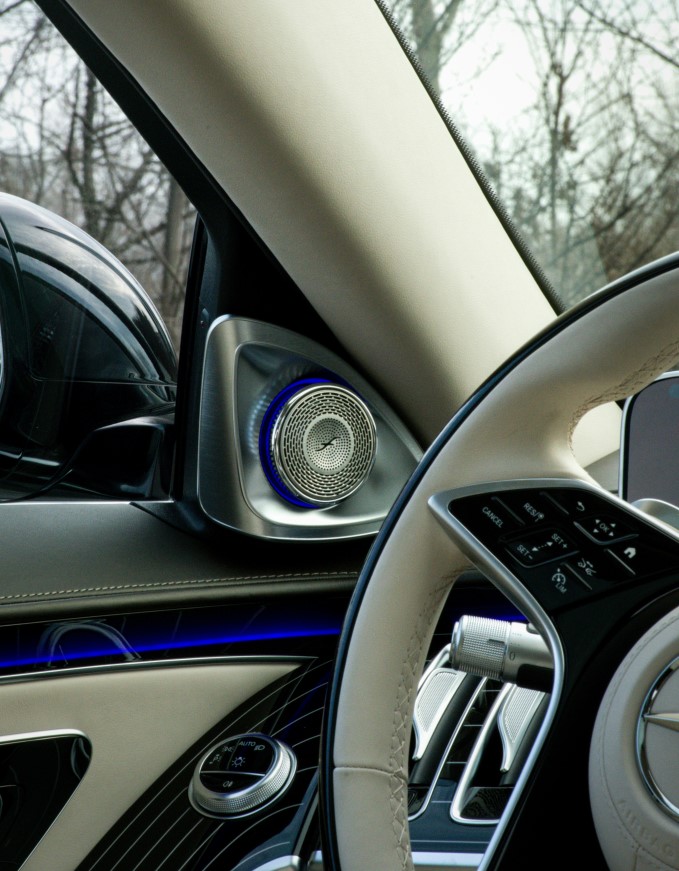
Pic 1 – high-end speakers in the car (by Borislav Ivanov, Unsplash)
Aftermarket Audio: The innovation test bed
The aftermarket segment is a vibrant, community-driven sector focused on customization, high-performance setups, and immersive sound experiences. It caters to consumers seeking to upgrade or personalize their vehicle’s sound beyond factory offerings, often due to perceived limitations in OEM systems. With over 35% of the market involving modified car audio products, it demonstrates increasing traction, particularly among enthusiasts.
Crucially, the aftermarket functions as a “Test Bed” for OEM innovation. Its flexibility allows companies to experiment with advanced features and push sound quality boundaries in ways that mass-market factory systems often cannot initially. Consumer demand for superior aftermarket solutions, in turn, pressures OEMs to integrate more premium components and advanced software features into their vehicles. This creates a symbiotic relationship where aftermarket innovation drives consumer expectations, influencing future OEM designs.
The aftermarket also exhibits a clear “Value vs. Performance” spectrum, catering to diverse consumer needs and budgets. Companies like Kicker offer affordable and reliable options with a bass-heavy sound, while Focal and Audison are recognized as “Hi-fi specialists” delivering “unparalleled clarity and realism” for audiophiles. This fragmentation ensures market resilience and continuous innovation across various price points.
Prominent Aftermarket Audio Brands:
- Pioneer: Known for modular versatility, wide speaker variety, and precise bass, with a long history of innovation.
- Kenwood: Offers high-quality speakers at an affordable price, balancing performance and budget-consciousness.
- Alpine: Celebrated for pioneering innovations like the first automotive navigation system and focusing on high-resolution audio.
- JL Audio: Characterized as a “Bass-focused powerhouse,” offering high-quality, DSP-based solutions.
- Rockford Fosgate: Positions itself as “high-performance pioneers” with a focus on “purpose-built audio” systems.
- Infinity: A hi-fi specialist with influence in both retail and OEM channels, benefiting from being a Harman International subsidiary.
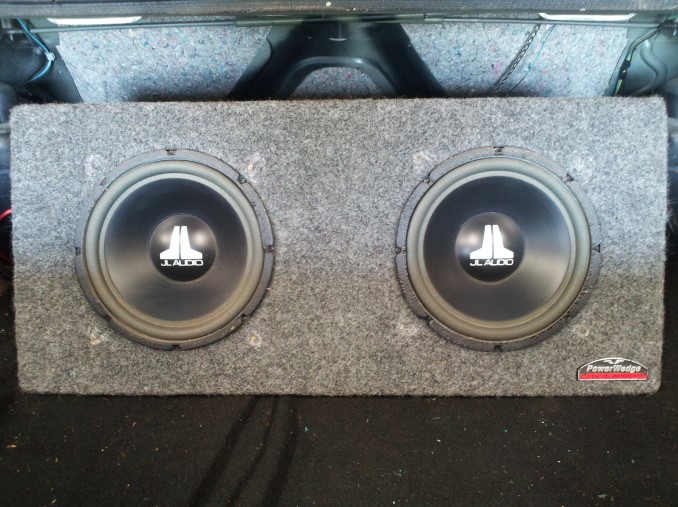
Pic 2 – JL Subwoofer (Wikipedia)
Software & inteligent sound design
This segment represents the intellectual core of modern automotive audio, focusing on middleware, DSP technologies, User Experience (UX) audio layers, and advanced AI-driven solutions. The broader global automotive software market, which includes audio software, was valued at $31.71 billion in 2024 and is projected to reach $91.86 billion by 2032, exhibiting a substantial CAGR of 14.3%.
A critical aspect is the “Interplay of Safety and Entertainment” in software architecture. As automotive systems become more complex, safety-critical functions (e.g., ADAS) must be robustly isolated from entertainment systems to prevent severe consequences from failures. QNX exemplifies this, serving as a real-time operating system (RTOS) that isolates safety-critical functions from infotainment, enabling compliance with stringent functional safety standards. The increasing software complexity also introduces critical cybersecurity and data privacy risks, necessitating rigorous testing and robust security measures, with security becoming a foundational requirement and competitive differentiator.
The market is also witnessing the “Rise of AI-Driven UX Storytelling”, transforming automotive audio into a sophisticated tool for enhancing user experience and influencing emotional connection.
Key Innovations and Players:
- Cerence: At the forefront of automotive AI, developing “agentic” and “generative AI” capabilities for empathetic interactions and natural language understanding through automotive-specific Large Language Models (LLMs) like CaLLM.
- Audiokinetic (Wwise): Recognized as the “gold standard interactive audio engine” for dynamic soundscapes in Human-Machine Interface (HMI) and Electric Vehicles (EVs). Wwise allows for customized vehicle chimes and synthetic engine noises crucial for EV brand identity.
- DSP Concepts (Audio Weaver): Integrates “AI + Audio Weaver” to transform real-time sound into intelligent, adaptive experiences, powering Active Noise Cancellation (ANC) and voice User Interfaces (UIs).
- Dolby Laboratories: A leader in immersive entertainment with proprietary Dolby Atmos and Dolby Vision technologies. Dolby has rapidly growing strategic partnerships with automotive OEMs (now exceeding 25) and a robust content ecosystem, driving demand for Atmos- compatible hardware.
- Sonos Automotive: Expanding into the automotive sector, enabling spatial audio and embedded systems, leveraging its home audio expertise.
- Elektrobit: A global vendor of embedded and connected software, focusing on cybersecurity and scalable OS, exemplified by its joint development of EV.OS with Foxconn.
- QNX (BlackBerry Limited): Dominates the automotive operating system market (35% share in 2023) due to its real-time OS for safety-critical and cybersecure functions.
This shift towards AI-driven UX storytelling means automotive audio is no longer just about sound reproduction but about creating a holistic, adaptive, and emotionally resonant sonic environment. AI enables personalized soundscapes, intelligent voice interactions, and even “sonic branding” through distinct EV engine noises.
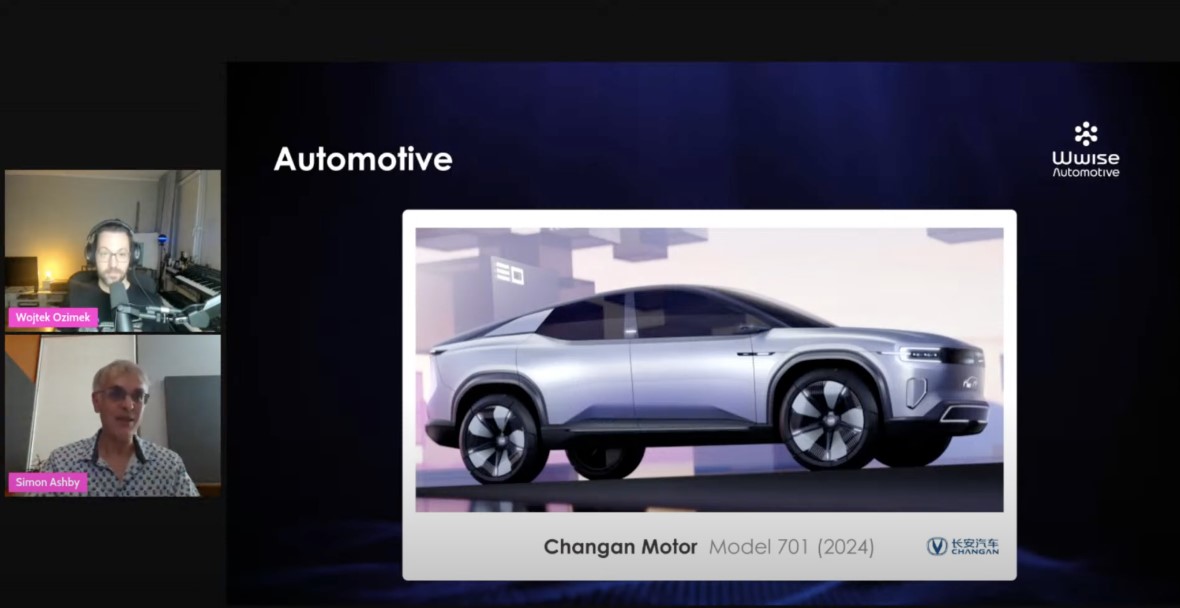
Pic 3 – Simon Ashby, Head of Product at Audiokinetic (Audio Product Podcast #2)
Cross-segment synergies & strategic dynamics
The market is moving towards a “system-of-systems” philosophy, where hardware, software, and even aftermarket potential are considered from the initial design phase to optimize for a seamless, integrated user experience. Hardware is no longer static; it is a platform continuously improved through software and Over-the-Air (OTA) updates.
Strategic partnerships and licensing models are paramount for enhancing capabilities, expanding market reach, and integrating cutting-edge technologies. Dolby’s success with its licensing model, ensuring recurring, high-margin revenue, and QNX’s higher per-unit licensing fees for safety-critical ECUs highlight that intellectual property (IP) licensing is becoming a primary revenue stream for software and immersive audio technologies. This allows companies to scale their impact without massive capital expenditure, shifting competitive advantage from proprietary technology alone to the ability to build and manage robust collaborative networks.
This increasing reliance on software and personalization strongly suggests a future where automotive audio features could be offered as a subscription or “Audio-as-a-Service” (AaaS). Features like advanced noise cancellation, specific immersive audio formats, or personalized sound profiles could be activated or upgraded post-purchase, aligning with the broader SDV trend of monetizing software features.
Challenges & future outlook
The automotive audio market faces several challenges, including supply chain disruptions, the high cost of developing advanced audio and noise-anceling software (potentially creating a feature gap between luxury and mass-market vehicles), and critical cybersecurity and data privacy risks. The rapid pace of technological change and intense global competition also demand continuous R&D investment.
Despite these challenges, the future of automotive audio is unequivocally software-defined and experience-centric. Key trends shaping this evolution include:
- Ubiquitous Immersive Audio: Formats like Dolby Atmos and personalized sound zones are expected to become standard, transforming the car into a personal concert hall.
- AI-Driven Personalization: AI will enable audio systems to adapt dynamically to user preferences, cabin environment, and even emotional states, moving beyond mere utility to become an “emotional companion”.
- Enhanced Active Sound Management: Crucial for quieter EVs, advanced Active Noise Cancellation (ANC) and synthetic engine sound generation will manage the in-cabin acoustic environment and provide brand-specific sonic identities.
- Seamless Connectivity and Cloud Integration: Wireless and cloud-based streaming, coupled with voice-controlled AI assistants, will allow personal playlists and preferences to follow users across different vehicles, aligning with car-sharing and subscription models.
- Sustainability: A growing focus on eco-friendly audio solutions, including energy-efficient components and lighter materials, will align with broader automotive sustainability trends.
Conlusion
The automotive audio market is undergoing a profound transformation, driven by the rise of EVs, increasing consumer demand for personalized experiences, and rapid advancements in software and AI. The “Luxury Audio Arms Race” in OEM, the aftermarket’s role as an “Innovation Test Bed,” and the “rise of AI-driven UX Storytelling” in software are defining characteristics. The future is a converged ecosystem where hardware, software, and content seamlessly integrate to deliver highly personalized and immersive experiences.
To thrive in this evolving landscape, companies are strategically recommended to:
- Invest in Software and AI Capabilities: Prioritize in-house development or strong partnerships to enable personalized, adaptive, and immersive audio experiences.
- Prioritize Seamless Integration and Ecosystem Collaboration: Adopt a holistic approach, pursuing strategic partnerships, joint ventures, and licensing agreements to leverage specialized expertise and expand market reach.
- Address Cybersecurity and Data Privacy Proactively: Integrate robust security measures from the design phase to build and maintain consumer trust.
- Focus on Experience-Centric Design: Shift from delivering mere sound to crafting a complete, personalized, and emotionally resonant in-cabin sonic experience, leveraging AI for adaptation.
- Embrace New Business Models: Explore opportunities for “Audio-as-a-Service” (AaaS) and subscription models for advanced audio features.
- Monitor Aftermarket Trends: OEMs should continue to closely monitor the aftermarket as an innovation incubator and a source of consumer insights.
Disclaimer: we couldn’t include all audio brands in the short articles that focus on key trends and players, but we are working on more robust market reports to provide in-depth analysis. Join our newsletter to be in touch.
Thank you for reading!


