Already being a fairly small industry compared to others, we will discuss some of the primary reasons why landing a new job in today’s market has become hard for so many.
Introduction
It’s no surprise that in the past several years, especially since the COVID pandemic in 2020, every industry has seen some variance of disruption. Between remote work, massive consolidations, artificial intelligence (AI), and plenty other factors, a new standard of employment conditions are upon us.
Even the process of finding a new job has become convoluted. Not only due to limited roles, but even the hiring process for many industries has created trouble for many people looking to further their careers. But within the vast audio industry (music, automotive, live sound, etc.), disruption continues to make life challenging for professionals all around the world.
Already being a fairly small industry compared to others, we will discuss some of the primary reasons why landing a new job in today’s market has become hard for so many.
Hot Topic: Applicant Tracking System in Hiring
Arguably the most noticeable and talked about topic in 2026 revolves around artificial intelligence. While technology continues to improve and challenge the status quo, AI has impacted almost every aspect of landing a job. Many hiring teams will incorporate an Applicant Tracking System (ATS) to manage the hiring process. This has the ability to parse through resumes to see if key words, phrases, employment history, and other pertinent information matches the role’s description. Inevitably, applicants now have to be approved through another layer of the hiring process, making it even more difficult to get in front of a recruiter or hiring team.
While there are plenty more examples of how artificial intelligence is disrupting job security, the ATS system is directly challenging candidates and making the hiring process even less personable. And within the audio industry (and many others), operational tasks are becoming more and more automated, making a lot of roles either reduced or worse, obsolete.
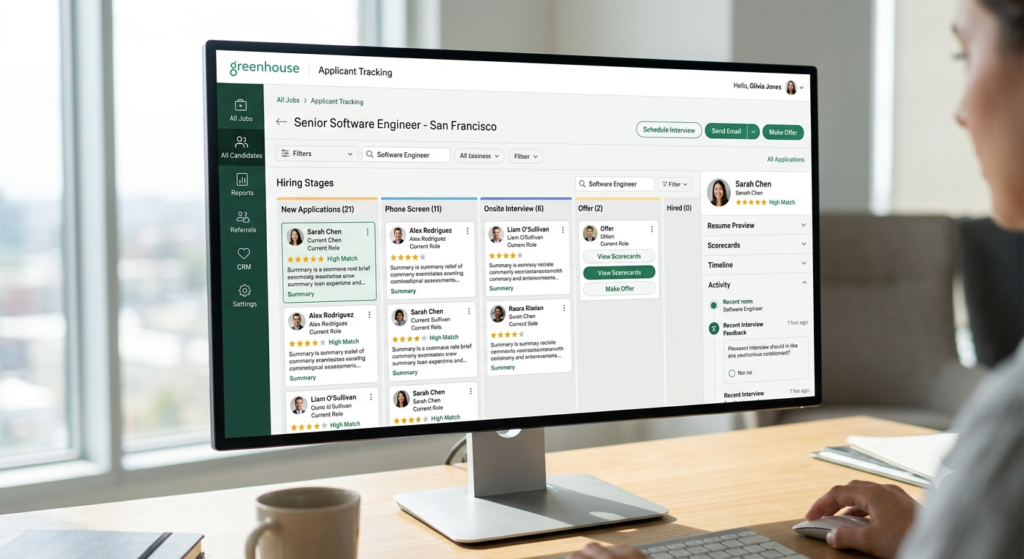
Fig. 1 Applicant Tracking System
Consolidated Roles & Skills
Not only because of AI, but the combination of mergers, private equity, post-covid economics, and more are contributing to organizations reducing the amount of roles they are filling. And ultimately, hiring less means companies don’t have to spend as much money; a big plus for them.
When considering global factors such as AI implementation, economic pressures in the form of tariffs, restructuring is often required to keep the balance sheets in order (pun partially intended). Companies in these scenarios are tightening their compensation budgets in order to evaluate long-term labor costs, hence mitigating any financial risk. And for any roles that are justified under budget constraints, high-impact roles are being prioritized while leaning on contract or project-based talent for secondary needs.
This inadvertently is putting pressure on individuals to showcase their specific talents and skillsets, making the hiring process even more targeted than in previous years. But having said that, hybrid skills are becoming a common requirement as well. Specialized experience is much needed, but adaptability is something that hiring teams are actively seeking during a volatile period of economic uncertainty.
Workflow Optimization: Artificial Intelligence
By no surprise, artificial intelligence is capable of optimizing repetitive tasks that traditionally were completed by humans. Whether being used in data entry, research, etc., companies are justifying the consolidation and optimization of multiple roles into single positions.
Within music production and studio engineering, digital audio workstations (DAW) now include automated processes to speed up the operational side of the work. Emerging roles, such as AI prompt specialists, are needed to help translate creative intent towards technical parameters. Looking towards live sound, intelligent systems are being deployed to analyze and dynamically manage channel levels and acoustic imperfections. The need for large teams of technicians to manually tune is decreasing and making it hard for specialized roles to be filled. For these reasons, engineers are expected to oversee different automated processes to ensure background tasks are meeting requirements.
These realities are forcing people to learn and adapt to new skillsets. But the hard part to this is realizing one simple concept: how can people learn and implement new skills if they aren’t in the position to be put in front of them? For these reasons, individuals have to find ways to learn for themselves in various ways. This is why we at Audio Product Academy have created courses including Building Your First AI Agent for Product Work that walks you through the many stages of AI development. By completing the course, you will not only have new skillsets to add to your resume, but verified certification is provided that can be added to LinkedIn, applications, and more.

Fig. 2 Audio Product Academy’s Course: Building Your First AI Agent for Product Work
Private Equity Swoops In
With consolidation being one of the hot topics of this discussion, it’s important to understand how private equity impacts the job market. Within the past few years, the audio industry has made huge moves including Boris FX’s acquisition of iZotope and STG now overseeing Avid. And when mergers of this size occur, immediate impacts are felt.
Fig. 3 Boris FX’s acquisition of iZotope in 2026
In any merger, an unintended consequence can include duplicate roles to now exist. Typically, administrative roles require restructuring to ensure a smooth transition. Just recently, Splice confirmed staff layoffs to allow the organization to move with “greater focus and agility”. Removing redundancy of duplicate roles also comes with the need for more cross-functional skillsets; if someone can do more than one task, it justifies a company to spend less on multiple roles.
And to maintain a lean balance sheet in a very ever-changing market, private equity firms are increasingly willing to hire both freelance and contractors. Therefore, salaries and benefits aren’t required to pay for. Let’s not forget that in typical situations, private equity firms come in to aid companies that are on the verge of either bankruptcy or operational collapse. A lot of financial backing is needed to bring things back to balance, and ultimately this can come at cutting roles to reanalyze how much workforce is needed to achieve company goals.
Key Takeways
With so many roadblocks, it definitely is overwhelming to know how to adjust to an ever-changing job market. But because this market is changing constantly, so can we. Whether you take on new skills including building your own AI agents, obtaining certifications, adding new skills doesn’t require you to be on the job (so to speak). Connecting with your peers on LinkedIn and in person is now more important than ever; power in community.
Here at Audio Product Academy, we not only offer courses and learning insights for professional development, but we strive to build a community that everyone can benefit from. From our meetups in Stockholm to workshops on team building, we aim to provide a multitude of resources that can aid in your development. Be sure to explore the resources on our website, and feel free to reach out to our team if you get stuck and need help keeping the momentum going.